Plan a relaxed Saturday using these options: a park open 9am-6pm, a museum open 10am-5pm, and a cafe open 8am-8pm. Start at 10am, include a lunch break, and allow 30 minutes between stops. Return a timetable without inventing prices or opening hours.
Claude Fable 5.1 API for Coding and Research
Connect to Claude Fable 5.1 in one click on RequestBeam. One API key connects AI and multiple data services, so you can focus on your business and explore new ideas.
Claude Fable 5.1 API pricing and billing
0-1M input tokens
Official price
- Input
-
$10.0000/M - Output
-
$50.0000/M - Cache input
-
$0.2500/M - Cache write (5m)
-
$12.5000/M - Cache write (1h)
-
$20.0000/M
Our price Save 45%
- Input
- $5.5000 /M
- Output
- $27.5000 /M
- Cache input
- $0.1375 /M
- Cache write (5m)
- $6.8750 /M
- Cache write (1h)
- $11.0000 /M
Claude Fable 5.1 online chat tool
Model settings
What does memory do?
It includes completed, reusable turns from this conversation in your next request, so you can ask follow-up questions without repeating the context.
What happens when it is off?Only your new message and any system prompt are sent. Existing messages stay visible; turning memory back on includes eligible earlier turns again.
Is this long-term memory?No. This is conversation context, not memory across separate conversations. Failed, stopped, truncated, or non-reusable replies are excluded. More history can use more input tokens and increase cost.
Advanced parameters
0 or more characters(0/No fixed limit)
No fixed character limit; the full request is subject to request-size and model-context limits. This is not a token count. Conversation

How can I help you today?
No response data yet Ready
Claude Fable 5.1 prompt examples
Draft a polite customer email for this situation: an order will arrive two days late, the revised delivery date is October 15, and tracking will be sent tomorrow. Apologize without inventing compensation. Include a subject line and keep the email under 120 words.
Turn these meeting notes into an action list: Maya will revise the proposal by Friday; Leo will confirm the venue next Monday; the budget needs approval, with no owner assigned. Use columns for task, owner, deadline, and open questions. Mark missing details as unknown.
What is Claude Fable 5.1?
Multi-step coding and research
Claude Fable 5.1 is a model released by Anthropic on September 1, 2026, focused on sustained analysis, multi-step tasks, and collaboration with tools. Rather than simply delivering quick answers, it is suited to complex coding problems and in-depth research that require deeper thought. Its native specifications support text and image input, text output, a one-million-token context window, and up to 128K output tokens. Its native API defaults to high effort, with reasoning effort available to adapt to the task.
Try text chat before integrating the API
RequestBeam's online tool lets you try Fable 5.1 quickly: sign in, create an API key, and add a small amount of credit to begin evaluating the model without integrating an API or buying a subscription. You do not need to open a separate Anthropic account, but this is not a guarantee against account restrictions; applicable platform terms still apply. This page supports text conversations, not file uploads, web browsing, or code execution.
What can you use Claude Fable 5.1 for?
Debugging and code review
Anthropic lists cross-codebase development, code review, and performance work among Fable 5.1's core use cases. Supply error traces, relevant code, environment details, and reproduction steps, and it can read compiler errors, stacks, and unfamiliar library source to follow dependencies and propose a solution. One customer described a rare crash that their team had not fully resolved for years: Fable 5.1 disassembled an external library, compared crash dumps, and traced the issue to a defect in that library, ultimately resolving it.
You can also ask it to check interface compatibility, exception paths, permission checks, resource cleanup, and data consistency. Treat it as an experienced assistant that proposes options, while developers retain responsibility for the decisions.
Research and analysis
Research and analysis is another core use case. Beyond summarizing material, Fable 5.1 can pursue calculations around a question, observe results, and adjust its approach. One customer reported that an optimization task needed additional prompting with Fable 5 but no longer needed the same guidance with Fable 5.1. With search or data tools supplied by the application, it can analyze public data, draft proposals, and produce assessments based on your needs; this text page does not browse the web itself.
Public data can contain substantial noise. We suggest building trusted sources around your understanding of the business, or using RequestBeam data APIs selected by our engineering and business teams.
Writing and document drafting
Fable 5.1's main writing improvements are clearer expression and better adherence to writing requirements, rather than merely producing longer articles. Anthropic's writing guidance recommends keeping the model in an assistant role rather than treating it as the primary content author, and continuing to review and judge AI-generated content yourself.
Anthropic recommends specifying the audience, the information or problem the reader needs addressed, the information that must be included, and the expressions that must be avoided. Concrete goals, structure, and examples are more likely to produce a useful draft than simply asking for a professional article.
Long documents and multi-turn discussion
In Artificial Analysis's comparison, Fable 5.1 has a higher composite index than Kimi K3, but scores 85% against Kimi K3's 89% on AA-LCR v1.1 long-context reasoning. The configurations are Fable 5.1 at Max with Default Fallback and Kimi K3 at Max. Kimi K3 therefore leads this particular long-document reasoning test; it does not support calling Fable 5.1 the strongest long-document model.
After context compaction in a long workflow, important constraints, decisions already made, or precise details may be lost, as Anthropic's prompting guidance discusses. If you can implement it in your application, we suggest retaining the essential information in every conversation.
Claude Fable 5.1 benchmarks: coding, reasoning and speed
Anthropic's launch evaluations and Artificial Analysis's independent evaluations are presented separately below. Their settings differ, and neither is a RequestBeam measurement.
Fable 5.1: 52.6% Fable 5: 24.7% GPT-5.6 Sol: 22.4%

Fable 5.1: 55.8% Fable 5: 42.0% GPT-5.6 Sol: 37.3%

Fable 5.1: 73.4% Fable 5: 70.5% GPT-5.6 Sol: 67.2%

Fable 5.1: 60.9% Fable 5: 57.8%

Fable 5.1: 65.0% Fable 5: 63.8%

Coding: the biggest jump is in terminal work
Fable 5.1's clearest coding improvement is in terminal tasks that require operating an environment, processing execution results, and continuing the work, rather than an average improvement across every coding task. Anthropic reports gains over Fable 5 of 27.9 percentage points on Terminal-Bench-Science 0.1, 13.8 points on Terminal-Bench 4.0, and 2.9 points on CursorBench 3.2.0. These differences suggest stronger execution of complex tasks rather than a uniform leap in code-generation quality.
The value is in connecting analysis with practical action. Anthropic describes cross-codebase development, writing tests independently, and using visual results to check whether an implementation meets its goals. Our interpretation is that it is better positioned to understand, modify, verify, and refine a solution rather than stop at a plausible proposal.
Reasoning: smaller, setting-dependent gains
Reasoning has improved, but some published tests show smaller gains than the terminal tasks. On Humanity's Last Exam, the score without tools rises from Fable 5's 57.8% to 60.9%, and the score with tools from 63.8% to 65.0%: increases of 3.1 and 1.2 percentage points.
We do not see effort as a simple switch where higher always means smarter. Anthropic's guidance defines it as a primary control over capability, latency, and cost, and notes that identical effort labels across models do not represent identical amounts of thinking.
Community discussion offers a useful counterexample. Hacker News user seaurchinzee interprets the system card as showing that the highest effort does not perform best on FrontierCode Extended, and that higher settings can increase unrequested changes. This concerns a particular coding evaluation, not HLE, but highlights that more reasoning does not always mean better adherence to the task. Scope matters alongside correctness, and Anthropic's prompting guidance separately addresses extra changes and scope expansion.
Independent index and throughput: two separate questions
We think Fable 5.1's overall capability and response speed should be evaluated separately, rather than reduced to one score. As checked on October 4, 2026, Artificial Analysis records an Intelligence Index of 53 for the Max, Default Fallback configuration, approximately 66.2 output tokens per second, and approximately 259.12 seconds to the first token.
On the same SVG drawing task, high took about 29.6 seconds and max about 13 minutes 54 seconds. We consider the highest-effort result better, but the wait and output usage also increased substantially. Our conclusion is that additional reasoning can improve some complex outputs.
Claude Fable 5.1 vs. Fable 5, GPT-5.6 Sol and Kimi K3
The most direct evidence supporting Fable 5.1 remains its lead on terminal tasks. The following table is an Anthropic launch evaluation.
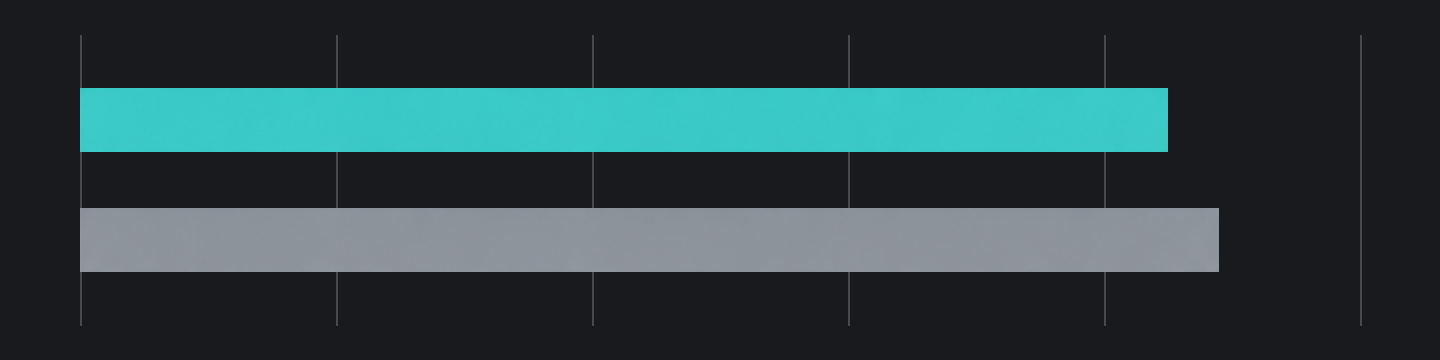
Fable 5.1: 53 Kimi K3: 44

Fable 5.1: 52% Kimi K3: 13%

Fable 5.1: 85% Kimi K3: 89%
| Benchmark | Fable 5.1 | Fable 5 | GPT-5.6 Sol |
|---|---|---|---|
| Terminal-Bench-Science 0.1 | 52.6% | 24.7% | 22.4% |
| Terminal-Bench 4.0 | 55.8% | 42.0% | 37.3% |
| CursorBench 3.2.0 | 73.4% | 70.5% | 67.2% |
Against Fable 5 and GPT-5.6 Sol: the clearest lead is terminal coding
These scores show a larger Fable 5.1 lead over GPT-5.6 Sol on the two terminal benchmarks than on CursorBench. One customer reported that Fable 5.1 matched or slightly exceeded Fable 5 in its tests while reducing per-task cost, prompting it to begin using the model for code review.
Against Kimi K3: long-document reasoning flips the ranking
Our assessment is that Fable 5.1 is stronger on the composite evaluation in this comparison. Artificial Analysis records an index of 53 for Fable 5.1 and 44 for Kimi K3, with Terminal-Bench 4.0 scores of 52% and 13%, respectively. On AA-LCR v1.1 long-context reasoning the ranking reverses: Fable 5.1 scores 85% and Kimi K3 scores 89%.
Some users may prefer Kimi K3's explanations and switch to it for code review or understanding a problem. Our current conclusion is that Fable 5.1 leads in composite capability, while Kimi K3 leads on this particular long-document test.
Why use Claude Fable 5.1 through RequestBeam?
Usage-based billing and model cost optimization
Reliable service at prices lower than official rates. Top up on demand and use what you pay for.
Unified AI models and data APIs, with multi-model access in one place
One API key connects multiple AI models and data services, reducing integration costs and letting you switch with one click. Business applications need both AI and data.
Call logs and application access controls, with clarity on every call
Every API call is recorded in your dashboard. Create separate API keys for different applications.
Model capabilities without compromise
We do not water down our models. We cannot offer you the cheapest, but we are committed to offering you the best.
How to use Claude Fable 5.1 on RequestBeam
After creating an API key in the console, follow the documentation to get started with Claude Fable 5.1.
Prepare your account and test online
Sign in, confirm your balance, and create an API key.
Try it in the Playground
Explore the model's capabilities in the Playground to find the best way to use it.
Integrate Claude Fable 5.1 into your business
Follow our developer documentation to integrate Claude Fable 5.1 into your business.
Future model upgrades
When a new model is released, simply replace the model name with the new one to upgrade.
Claude Fable 5.1 API FAQ
Is Claude Fable 5.1 the same API model as Fable 5?
No. Claude Fable 5.1 (API model name: claude-fable-5-1) is an upgraded version of Claude Fable 5 (API model name: claude-fable-5). Use the correct model parameter when calling the API.
Why is thinking empty or the answer incomplete?
Native Fable 5.1 uses adaptive thinking by default and can omit thinking text. Ordinary requests do not need a thinking parameter, and empty thinking alone is not a failure. For an incomplete answer, check the completion state and output allowance, leaving enough room for thinking and final text.
How should I troubleshoot authentication, balance, or access errors?
Follow the API error documentation to diagnose the issue.
Can I use OpenAI Responses for Claude Fable 5.1?
OpenAI Responses is not supported. Claude has its own Claude Messages format; see the documentation for details.
Can I force a tool call or edit a native Messages conversation?
Native Fable 5.1 does not support forced tool_choice types any or tool. Take care when replaying preserved thinking after editing earlier messages. Keep native assistant content blocks and their signatures intact during tool continuations.
Is conversation memory permanent?
No. The API does not automatically retain conversation context for subsequent requests. Manage the history yourself and include the required context in each request. Long-term memory must be implemented by your application.
Related text APIs
Claude Fable 5.1 API specification and requests
Claude Fable 5.1 API quickstart
claude-fable-5-1Chat CompletionsPOST /v1/chat-completions
curl -X POST "https://api.requestbeam.com/v1/chat-completions" \
  -H "Authorization: Bearer <API_KEY>" \
  -H "Content-Type: application/json" \
-d '{"model":"claude-fable-5-1","messages":[{"role":"user","content":"Hello, introduce yourself in one sentence."}],"stream":false}'MessagesPOST /anthropic/v1/messages
Messages requires max_tokens. The allowance in this example is editable, not an upstream default or a model limit. Thinking may consume it before any answer text; adjust it for your task and check output costs.
curl -X POST "https://api.requestbeam.com/anthropic/v1/messages" \
  -H "Authorization: Bearer <API_KEY>" \
  -H "Content-Type: application/json" \
  -H 'anthropic-version: 2023-06-01' \
  -d '{"model":"claude-fable-5-1","max_tokens":4096,"messages":[{"role":"user","content":"Hello, introduce yourself in one sentence."}],"stream":false}'
Family and protocol reference
Claude Messages
Full API documentationNative Claude Messages-compatible API. This endpoint uses Anthropic Messages request and response shapes, including tool calls and Anthropic SSE events.
POST
https://api.requestbeam.com/anthropic/v1/messagesNative Claude Messages-compatible API. This endpoint uses Anthropic Messages request and response shapes, including tool calls and Anthropic SSE events.
text
POST https://api.requestbeam.com/anthropic/v1/messagesAuthentication
All requests require a RequestBeam API Key. Anthropic SDKs, Claude Code, and compatible clients usually use x-api-key; plain HTTP clients may also use Bearer Token authentication.
http
x-api-key: YOUR_REQUESTBEAM_API_KEY
anthropic-version: 2023-06-01
http
Authorization: Bearer YOUR_REQUESTBEAM_API_KEY
anthropic-version: 2023-06-01
Body
modelstringrequiredDefault: claude-sonnet-4-6Supported Claude model IDs.
claude-fable-5claude-fable-5-1claude-haiku-4-5claude-opus-4-5claude-opus-4-6claude-opus-4-7claude-opus-4-8claude-opus-5claude-opus-5-5claude-sonnet-4-5claude-sonnet-4-6claude-sonnet-5
Use GET https://api.requestbeam.com/v1/models for the models currently available to your API Key.
max_tokensintegerrequiredMaximum number of output tokens, as a positive safe integer. This budget includes both thinking and final text output tokens. Missing, zero, negative, fractional, string, or unsafe-integer values return HTTP 400 with invalid_request_error before generation or billing. The model may impose a lower maximum.
For models that produce thinking, a small budget such as 128 may yield only thinking blocks before ending with stop_reason: "max_tokens", without text output. Set an explicit budget for the task and the selected model, allowing room for thinking and the final answer. The values in the examples are editable allowances, not upstream defaults or model limits; larger allowances may increase output usage and cost.
messagesobject[]requiredConversation messages. Each message contains role and content.
role supports user and assistant. content may be a string or an array of content blocks.
systemstring | object[]System prompt. Anthropic Messages uses a top-level system field instead of a system role in messages.
streambooleanDefault: falseWhether to return Anthropic SSE events.
temperaturenumberSampling temperature. Accepted values and effects vary by the selected model.
top_pnumberNucleus sampling parameter. Acceptance does not guarantee that it changes generation behavior.
top_kintegerTop-k sampling parameter. Support depends on the selected model.
stop_sequencesstring[]Stop sequences.
Requests with nonempty stop sequences avoid model services known not to support them; if no compatible service is available, the request returns 400 before generation or billing.
toolsobject[]Anthropic tool definitions. Function tools usually include name, description, and input_schema.
tool_choiceobjectTool selection policy, such as { "type": "auto" } or { "type": "tool", "name": "..." }.
thinkingobjectNative Anthropic thinking configuration, subject to the selected model and provider's support. Claude 4.5 uses { "type": "enabled", "budget_tokens": 1024 }; Claude Sonnet/Opus 4.6 also support adaptive thinking. Do not apply a manual budget to every model version. In tool continuations, return the complete ordered assistant content, including thinking, signature, redacted_thinking and tool_use, unchanged. Keep the thinking configuration and required anthropic-beta headers consistent through the tool round trip. For SSE, concatenate signature_delta.signature fragments for the same content block; an empty thinking summary does not mean its signature can be discarded. A provider account access rejection is an upstream failure, not evidence of an invalid signature. Recognized Bedrock account access rejections return HTTP 502 with api_error; ordinary client validation errors retain HTTP 400. Acceptance still requires an enabled upstream account.
metadataobjectRequest metadata.
Prompt Caching
Add cache_control: { "type": "ephemeral" } to a system or message content block. Cache usage may include cache_creation_input_tokens, cache_read_input_tokens, and supported 5-minute or 1-hour creation buckets. A 1-hour TTL also requires the corresponding anthropic-beta header.
Request Examples
Non-Streaming
json
{
  "model": "claude-sonnet-4-6",
  "max_tokens": 1024,
  "messages": [
    {
      "role": "user",
      "content": "Hello, introduce yourself in one sentence."
    }
  ],
  "stream": false
}
Streaming
json
{
  "model": "claude-haiku-4-5",
  "max_tokens": 1024,
  "messages": [
    {
      "role": "user",
      "content": "Reply exactly OK."
    }
  ],
  "stream": true
}
Response
Non-streaming responses keep the Anthropic Message shape.
idstringResponse ID, such as msg_....
typestringObject type, usually message.
rolestringUsually assistant.
modelstringActual Claude model used.
contentobject[]Native output content blocks, including text, tool_use, and thinking when used.
stop_reasonstringStop reason, such as end_turn, max_tokens, stop_sequence, or tool_use.
usageobjectToken usage, including input_tokens and output_tokens. Cache token fields are included when present.
Success Example
json
{
  "id": "msg_01...",
  "type": "message",
  "role": "assistant",
  "model": "claude-sonnet-4-6",
  "content": [
    {
      "type": "text",
      "text": "Hello, I am Claude and can help with writing, coding, and analysis tasks."
    }
  ],
  "stop_reason": "end_turn",
  "stop_sequence": null,
  "usage": {
    "input_tokens": 18,
    "output_tokens": 24
  }
}
Streaming Response
When stream: true, the endpoint returns Anthropic SSE events. Common events include:
message_startcontent_block_startcontent_block_deltacontent_block_stoppingmessage_deltamessage_stop
Error Response
See Error Codes and Troubleshooting for the full code reference, protocol differences, and diagnostic steps.
Error responses use the Anthropic-style shape:
json
{
  "type": "error",
  "error": {
    "type": "authentication_error",
    "message": "Invalid credentials or API key has expired."
  }
}